



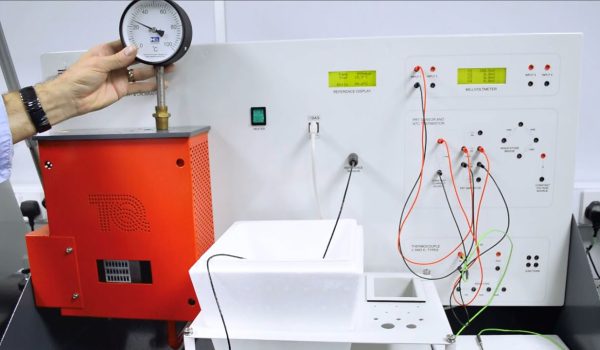
Temperature and humidity laboratory
Taban Control Daghigh temperature and humidity calibration laboratory is able to serve its dear customers by using the latest equipment and utilizing the technical knowledge of its experts in all laboratory areas related to temperature and humidity. It should be noted that this group uses the highest primary standards available in the country, which are constantly calibrated by internationally recognized bodies abroad, and also provides its services in this laboratory with the best measurement capabilities.
Services provided in the temperature and humidity calibration laboratory
- Calibrate standard resistance thermometers and thermocouples with equations and interpolation
- Calibration of thermal environment (furnace and calibration bath) with temperature stability chart
- Thermocouple calibration
- Calibrating a resistance thermometer
- A standard resistance thermometer is tested using the triple point of water
- Laser thermometer measurement
- Calibration of the liquid-in-glass thermometer
- Calibrating the thermometer with the number
- Completed thermometer calibration
- Temperature display and simulator
- Calibration of temperature and humidity switches and transmitters
- Temperature and hygrometer calibration
- Calibration of temperature and humidity chambers
- Calibrate all types of thermal environments including: ovens, incubators, autoclaves, water baths, bain-maries, salt sprays, refrigerators, freezers, etc.
What is temperature calibration?
Temperature calibration is used for all equipment used in temperature measurement systems. usually a platinum resistance thermometer (PRT or PT-100), thermocouple, or thermometer. Thermometers are usually calibrated by placing them in a constant temperature (heat source) and comparing their performance to a reference thermometer or standard thermometer (used in calibration). A thermometer is a device used to check and correct the values measured by a thermometer. Thermometers that use a thermometer or RTD temperature sensor give us the ability to compare the actual temperature with the measured values with high accuracy.
A very important feature of temperature calibrators is their measurement accuracy, and this is one of the main factors that determine the price of temperature calibrators.
Thermometers and other temperature measuring devices are subject to drift, so their calibration is very important. In addition to reference equipment and appropriate methods, temperature calibration also requires an experienced calibration specialist to perform the most accurate measurements possible. Marking, length, thickness and distance thermometers show how to use and measure. Therefore, it is very important to know how this device measures during calibration.
Types of temperature calibration devices
Instruments used to calibrate thermocouples and other temperature measuring instruments are selected and used according to their temperature range. Generally, calibration devices are divided into three groups.
Basically, these devices perform the calibration method by comparison, for example, we heat a source to the desired value and keep it constant and compare this value with the device under test. It will be checked for correctness and if there is a difference that can be fixed, we will fix it, otherwise it will be deleted.
1. Thermocouples
This unit is almost the most commonly used unit of temperature. It consists of two different metals. The output voltage indicates the temperature
2. Temperature calibration thermistors
It is based on semiconductors and measures temperature in the low (low) range.
3. Resistive Temperature Sensors (RTD)
They are usually made of wire wrapped in platinum. Although expensive, they are accurate instruments and respond quickly.
4. Liquid bath
These devices must be equipped with a precise temperature control system with digital indication as well as a liquid agitator. For these devices, temperature stability at the set point is very important, and in some cases they are manufactured and used with an accuracy of 0.005 degrees Celsius, and the liquid inside is usually made of stainless steel with different volumes.
5.Electric furnace
This device has a cylindrical metal body that is heated by an electric heater and is controlled by a temperature controller. The test device is installed inside a metal box, and next to the temperature reference sensor, a digital calibration indicator is installed and the device is adjusted, and the temperature of the test device is compared with the calibration indicator at several points, the temperature difference is known, and if necessary, measures are taken to adjust it.
6. Bath with liquid powder
The furnace consists of a box in which sand or aluminum oxide, completely in powder, is placed in it, and the temperature of the powder is adjusted as required by the electric machine. This device can create temperatures between 50 to 700 degrees Celsius. Because the temperature inside the powder is uniform and does not cause sticking. Air or nitrogen is introduced into the powder at a pressure of 3 psi at a flow rate of 3 cubic feet per minute.
On the other hand, the precise temperature control device adjusts the oven temperature according to the desired shape. This device works with an accuracy of 0.2 degrees and only 1 degree error at high levels. The vapors formed after heating the liquid powder are collected by special filters.
Using temperature calibration
- Calibration and reference of measuring instruments
- Having found that the device has the correct design and regulatory characteristics
- Portable temperature calibrators have laboratory applications and are used to calibrate thermometers.
Important criteria for choosing a temperature calibrator
- Check the input sensor.
- (inputs)
- Measurement accuracy
- Distance measurement test
- Types of units of measurement
- The portability of the equipment
- Reporting and checking the ability to connect to a computer
- …